At the heel of the Italian ‘boot’, Puglia is an area often overlooked by many tourists. Here’s why foodies should not miss this amazing region.
Get off the beaten path and adventure to Puglia with us on our Taste of Puglia tour – you won’t be disappointed. Whether it’s your first of 10th time to Italy you will love this food lovers tour.
Puglia (pronounced poo-li-ya) has a population of around 4 million a coastline that stretches 800km and a history that spans thousands of years.
Puglia was conquered by the Byzantines, Saracens, Normans and the Holy Roman Empire, as well as the French, Spanish and Ottomans. This resulted in a melting pot of cultures which can still be seen in its cultural landscape, folklore and architecture as well as its winemaking and cuisine.
While the landscape in Puglia is stunning and the history deep it is the food and wine you will love.
Few areas in Italy produce as many excellent ingredients as Puglia. Its agricultural heritage and enviable coasts make it the perfect place for great food and thus your next foodie adventure.
Often known as the ‘breadbasket of Italy’ the food of Puglia is heavily influenced by its agricultural backbone. In contrast to other regions of Italy Puglia is fairly flat, couple this with a great climate it has long been the hub for growing wheat, olives and grapes.
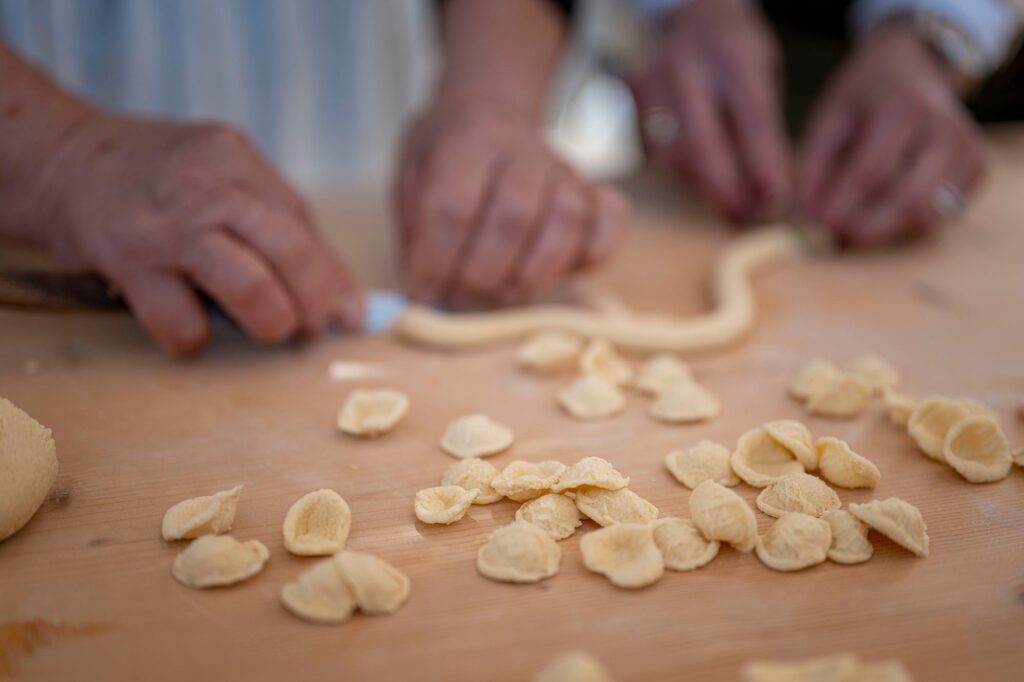
The local durum wheat is used to make pasta most notably orecchiette. Visit the capital, Bari and you can still the Nonna’s hand rolling orecchiette. Its name translates roughly to ‘little ears’ and is usually less than a thumb in size. Indented in the centre it often pairs with green vegetables such as broccoli. In fact, I use to work for a couple in Melbourne who came from Puglia and Michaels orecchiette with broccoli was my favourite lunch.
Another Puglia pasta that you may come across is ncannulate. Similar to busiate which we learn to make in Erice on our Taste of Sicily tour, ncannulate is a long, flat and tightly twisted form of pasta that is often paired with a tomato sauce.
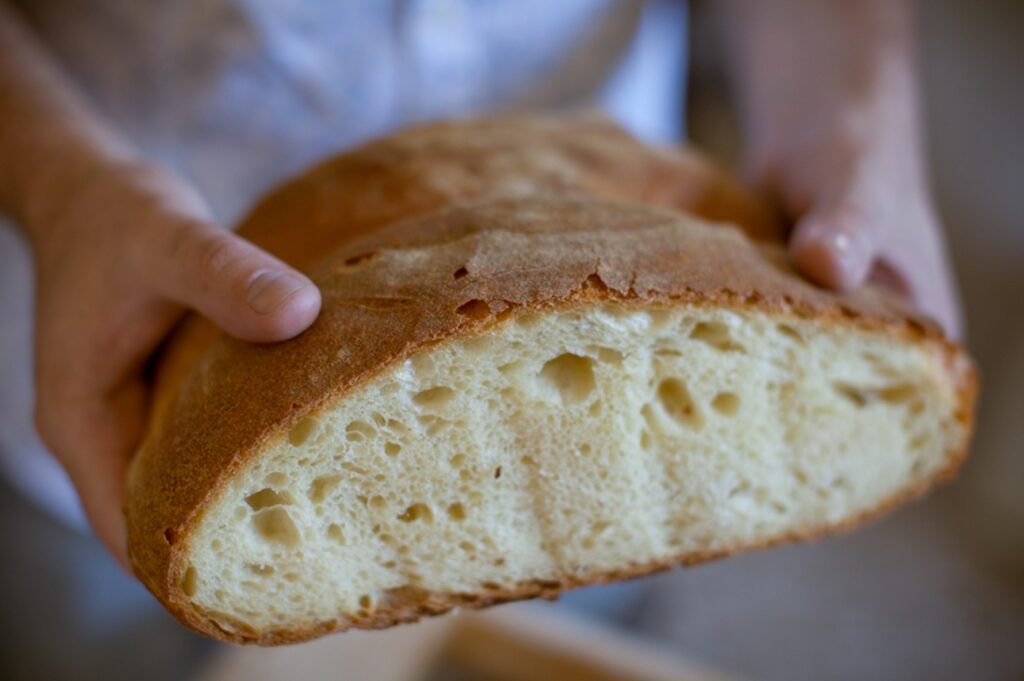
The local durum wheat is also central in Puglia’s delicious bread, which comes in all shapes and sizes and is a constant companion to meals. In more remote villages, communal wood-burning ovens still exist where local housewives can bake their own bread.
Altamura, a small town in the north-west of Puglia was the first town in Europe to receive a DOP classification (Denomination of Origin of Production) for its bread. We visit Altamura on our Taste of Puglia tour to learn first-hand how this bread is made and of course to try the real deal. After all this is a tour for foodie adventurers.
When McDonald’s came to town, the locals gave it short shrift, continuing to prefer only sandwiches made with their own bread. Less than two years after opening, McD’s left town! A victory for food lovers everywhere!
Focaccia is the most popular street food in Puglia. Served warm with olive oil and various toppings such as onions, aubergines, cheese, olives, this is one you will inevitably try many times on your foodie adventure of Puglia.
Panzerotti, a cross between a Cornish Pasty and Calzone are another must try in the Capital Bari. They are made from pizza dough and filled with tomato, mozzarella and ham then deep fried.
Taralli Pugliesi are a traditional Italian snack from the region of Puglia, located in the southeastern part of the country. These little ring-shaped treats are famous for their crunchiness. Whether enjoyed on their own or paired with a glass of wine, taralli Pugliesi are a beloved staple in Italian cuisine.
Aperitivo time in Puglia means a bowl of taralli. Originating from the ancient Romans times, taralli were originally made as a way to use up leftover bread dough. The dough was shaped into rings and then boiled before being baked to achieve the desired crunchiness. Taralli have with different variations being developed throughout Italy. You can pick up a packet almost everywhere.
Friselle is a crunchy taralle baked until toasted and served with tomato, garlic, oil and salt – Puglia’s Bruschetta.
While not unique to Puglia – or Italy, the fava bean is a true staple of Pugliano cuisine. Many different beans and peas are grown across the region, and you’ll be surprised how many towns create dishes with their own local produce at heart. However, the Fava Bean is found on almost every menu in the region, and more often than not it will be in the form of a bean puree.
Purea di Fave is an incredibly versatile ingredient – some places will serve it as a warm soup with chillies, while others create a thick foam that is paired with vegetables such as peppers. By far the most famous dish is Purea di Fave con Cicoria, which roughly translates as fave puree with chicory.
Kiwi foodie travellers will love that Puglia’s rocky interior is ideal for sheep-farming and, in terms of meat, lamb reigns supreme. Feast days are characterised by the fragrances of roasting lamb wafting through the streets, and most restaurant menus will feature at least a couple of lamb dishes.
Bombette are a staple street food where pork meat is stuffed with pancetta and caciocavallo cheese and then grilled. These are a must try in Valle d ’Istria.
Still in the Valle d’Itria area, and especially in Cisternino look out for the rosticceria butchers where you can choose your meat and have it cooked there and then on a hot charcoal grill or in a wood-burning oven. While waiting, just take a seat at one of the tables and get stuck into a glass of local wine!
The presence of so many sheep also means Puglia’s pecorinos and ricottas are excellent and everywhere.
On the topic of cheese, Burrata, the on-trend cheese appearing on every menu these days, is from Puglia. This fresh, soft cheese should be eaten within 24 hours of production – so to try the real deal culinary tourists need to come to Puglia.
Unsurprisingly for a region surrounded by some of the most beautiful seas in the world, a trip to Puglia would not be complete without trying some local seafood. Red mullet, anchovies, gilt-head bream, mussels, sea bass and cuttlefish feature in many recipes and the many seafront restaurants in towns.
Tiella though is the region’s most popular fish dish. This Italian take on the Spanish paella is commonly a mixture of rice, potatoes, onions and mussels.
Puglia’s desserts are often almond based (the region produces vast quantities of almonds), often combined with honey or vin cotto di fichi (a kind of fig concentrate), while sweetened ricotta cheese sweets are also a local favourite.
In Salento you must try Pasticciotto, the signature dessert and culinary emblem of the area, beloved for its golden, crumbly shortcrust pastry shell and a creamy, warm custard heart.
Olives & Olive Oil
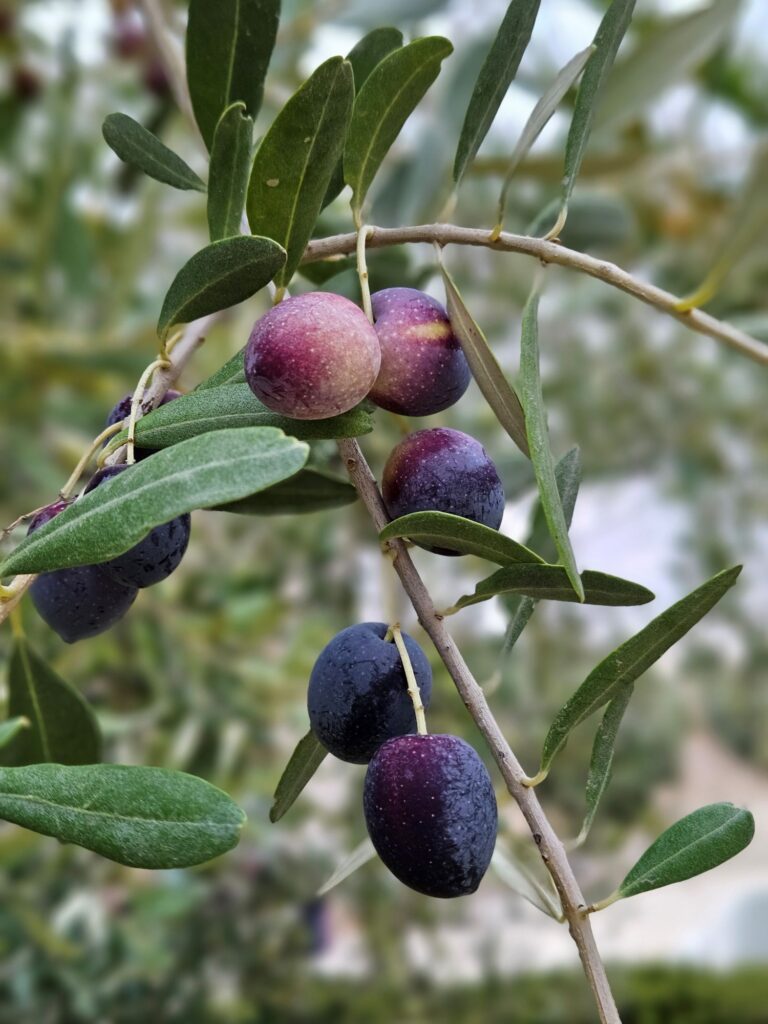
Puglia is famous for its olive oil production but be sure to try Bella de Cerignola olives. These deep green olives from the Foggia province are the largest olives in the world. With a mild flavour and meaty texture, they are the perfect appetiser with an aperitivo.
Puglia produces approx. 40% of the Italy’s olive oil, or around 300,000 tonnes a year. So, if you are an olive oil fan, looking to learn more about this liquid gold, Puglia is the place to go.
In the last 5 years, Xylella has destroyed over 21 million olive trees in Salento, one of Puglia’s most important crops. Puglia, at its peak, produced 80% of all olive oil produced by Italy. Olive groves that have been in the same family for generations have been decimated.
Wines of Puglia
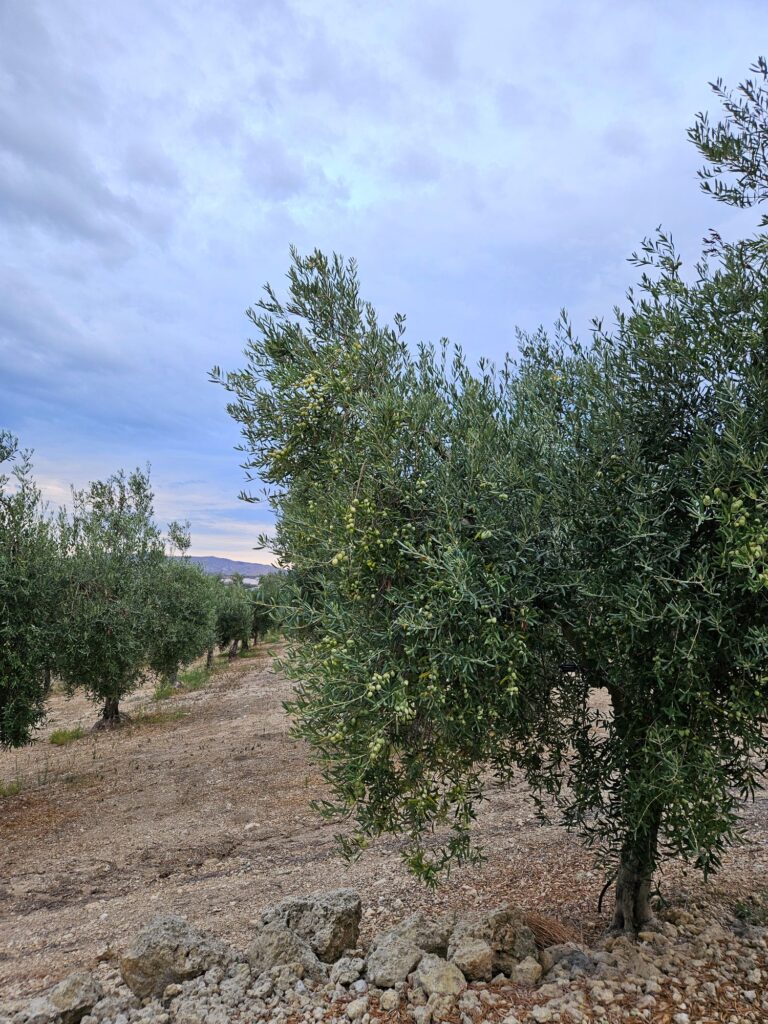
Puglia can trace its winemaking to at least the 7th century B.C. with the arrival of the Greeks. In more modern times, in the 1960s, it became known for producing huge volumes of potent red and white wines shipped north to blend with and bolster wines lacking power, concentration and pigment. Puglia accounts for around 17% of Italy’s total wine production, making it the biggest wine-producing region in the country.
Much like Sicily, a new generation of producers are moving away from the bulk attitude, practicing yield management and more sustainable viticulture. The result has been more estate-grown wines and the ascension of the region’s indigenous grapes.
Puglia is best known as the home to Primitivo di Manduria, but is actually home to 24 other DOCs (Denominszione di Origine Controlla). Aside from Primitivo, Puglia also produces Salice Salentino, a powerful red wine that is regarded highly worldwide thanks to its exceptional quality and reasonable prices. Nero di Troia is a dark-fruited, high-quality grape said to have originated in city of Troy and Negroamaro a native red that is robust and deeply pigmented.
More than just good food and wine!
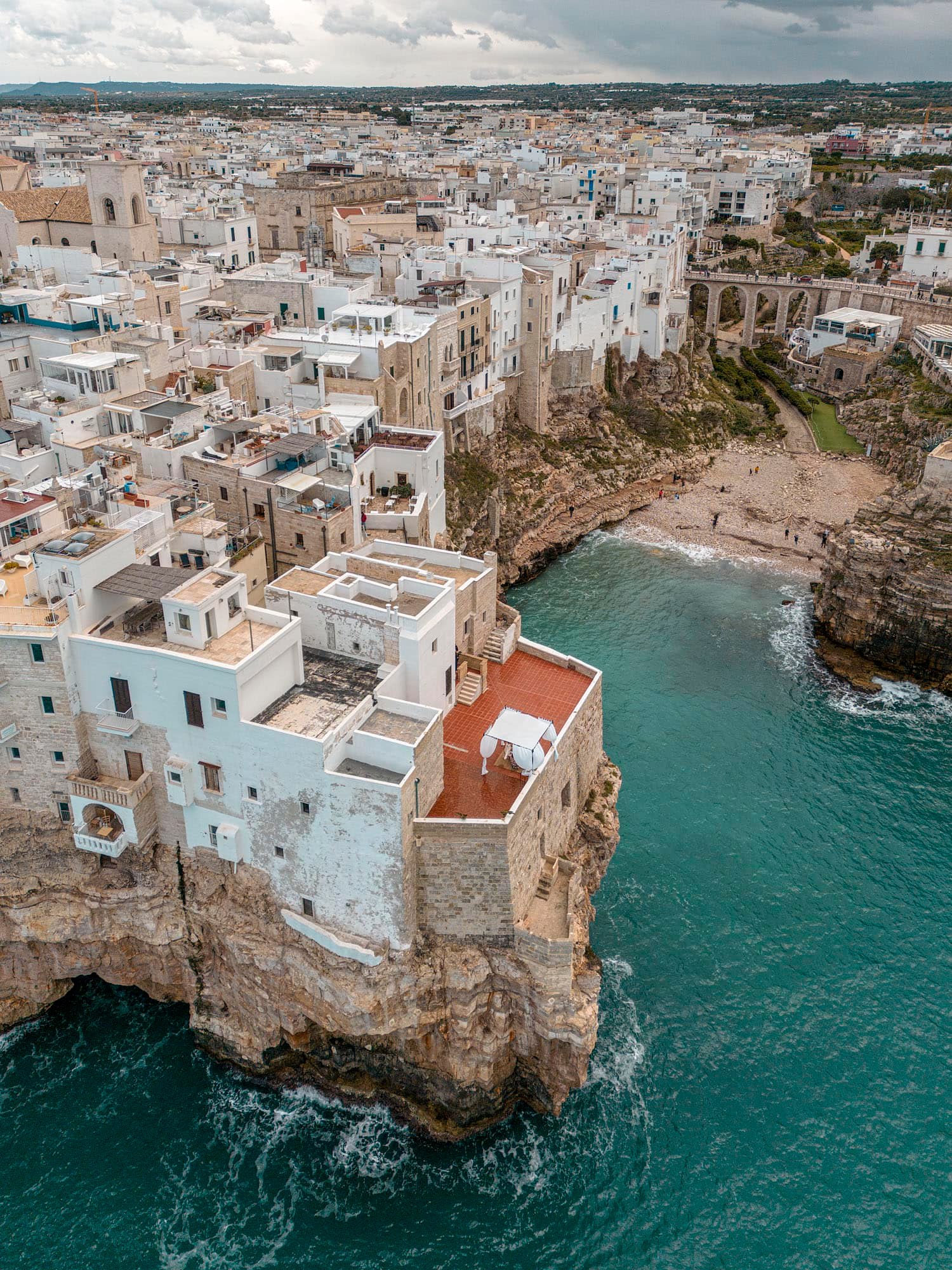
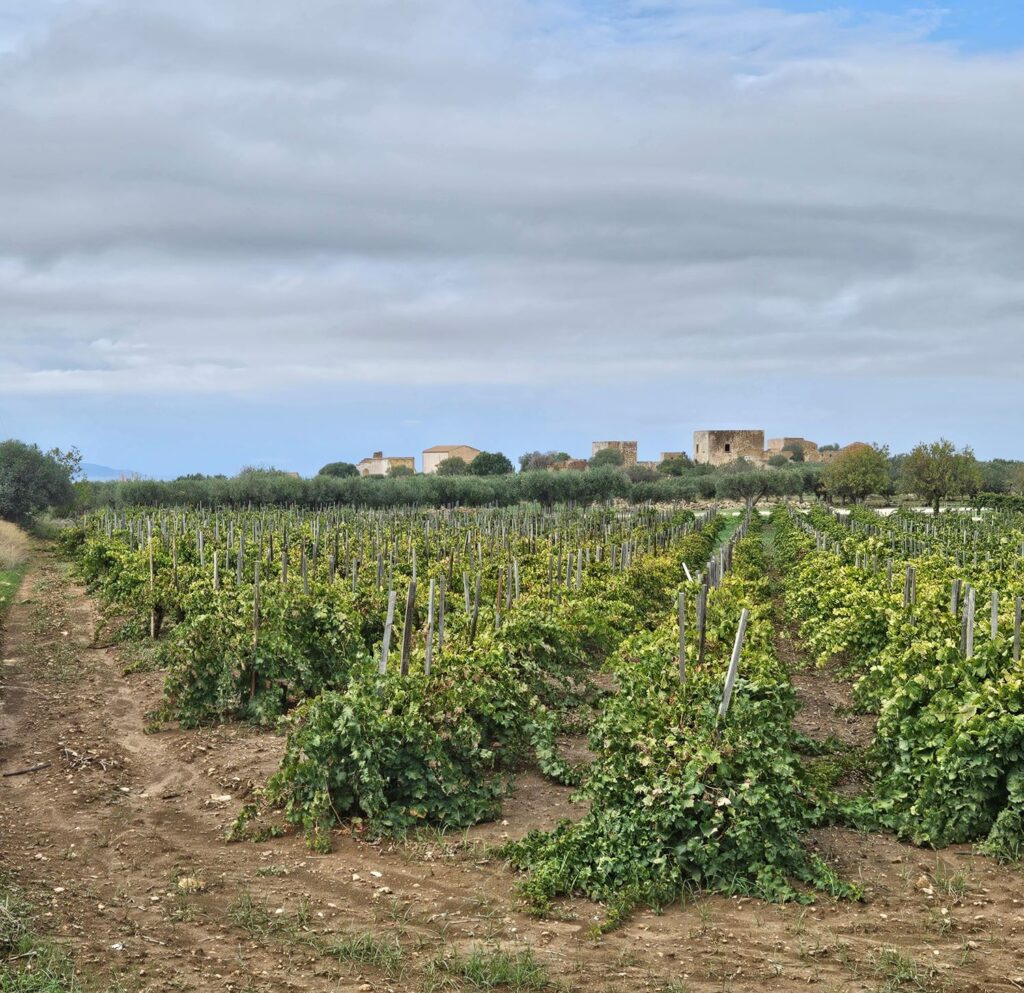
Puglia’s coastline stretches 800km, which means stunning beaches everywhere! The crystal-clear waters on Puglia’s Adriatic and Ionian Coasts are paired with the perfect climate.
Originally colonised by Mycenaean Greeks.
One of Italy’s most archaeologically interesting areas, Puglia is an absolute hub for history. Lecce, is often named ‘Florence of the South’ as it is packed with historical gems, including a Roman amphitheatre.
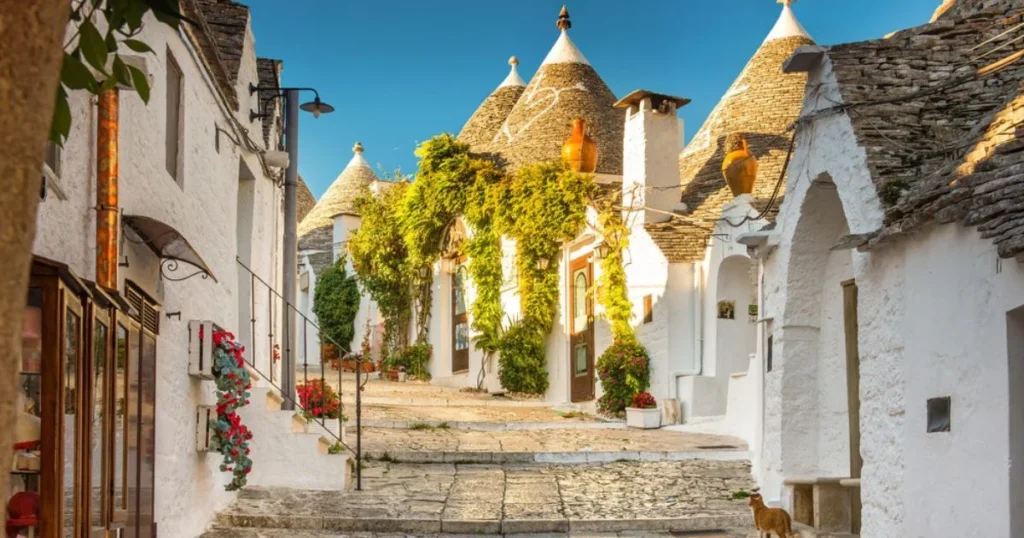
Trulli Houses
The rich farming heritage of Puglia is prevalent in the landscape picture, with the iconic white Trulli dotted all around. These cone-shaped dwellings are remarkable examples of drywall construction, dating back to a prehistoric building technique which is still in use.
Alberobello, a UNESCO site, is one of the best places to experience these, with streets lined by these unique dwellings, more than 1600!
Built directly on to the limestone base, a dry-stone wall technique was used meaning that no mortar or cement was used to hold the slabs together. The walls comprise of a double skin filled with rubble protecting them from the cold in the winter and the heat in the summer. A doorway and small windows pierce the walls and internally, there would have always been a fireplace and various alcoves recessed into the thick walls. The roofs were also double skinned with a domed inner layer of wedge-shaped stone and an outer waterproof cone of local limestone slabs known as “chianche”.
The roofs often bear mythological or religious markings in white ash to ward off evil influences or bad luck. The building would always have a water tank built below it and water would have been collected from the eaves via a channelled slab. A flight of narrow steps gave access to the roof.