 Sicilian couscous being made by hand
Couscous is a dish we usually associate with North African countries like Morocco, Algeria & Tunisia. But it is also a celebrated dish in Sicily, particularly in the West of the island.
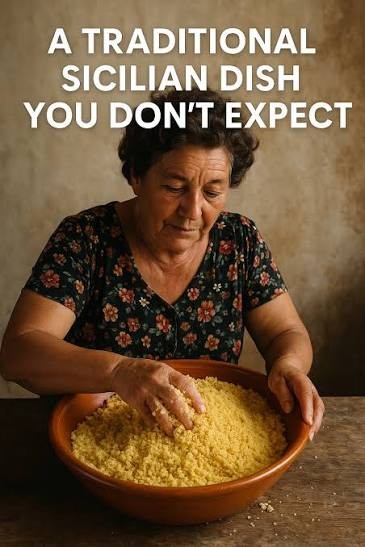
To make Couscous, coarse semolina is tipped into a wide, glazed terracotta bowl called the mafaradda. Wet fingers, drop water into the grain, and begins to turn it.
Always the same direction. The motion is called incocciatura, and it cannot be hurried.
Under the palm loose flour catches, clusters, and rounds into thousands of tiny pellets, each one rolled into being . This is a tradition and a skill past down from generation to generation.
In the summer of 827 AD, an Aghlabid fleet out of Ifriqiya (modern Tunisia) made its first landfall on Sicilian soil at Mazara del Vallo, south of Marsala and almost a straight lina across the sea from Tunisia.
This was the start of the Muslim conquest of Sicily, a campaign that would take most of a century and result in nearly two hundred and fifty years of Arab-Muslim rule.
Amazigh tribes joined the expedition of 827 and settled the island in the generations after, especially in the west.
The culture that grew in Muslim Sicily joined Arab and Amazigh traditions together with the older Greek, Latin, and Jewish life already there. Something you see in Sicily everywhere.
Then Sicily did what Sicily always does. It made the thing its own.
Where the Maghreb served couscous beneath lamb or chicken, Sicilian couscous is built on fish. Steamed above a simmering fish broth in the traditional cuscussiera pot, the grain absorbs the sea itself, carried upward on fragrant currents of steam.
And like so many celebrated Sicilian dishes Couscous belonged to fishermen and working families, made from inexpensive grain and the fish that was close at hand: small catch, bones, scraps, and whatever could be turned into broth.
An old Sicilian saying still uses it as a measure of something of little value: “barely good enough to make couscous.”
Long after the emirs were gone, the waters between western Sicily and Tunisia remained a working bridge rather than a border. Fishermen from Trapani, San Vito Lo Capo, and Mazara del Vallo crossed regularly between the two shores, carrying skills, customs, and food traditions with them.
Mazara, the site of the first Aghlabid landing in 827, is still home to one of Italy’s largest Tunisian communities.
Since 1998, every September, San Vito Lo Capo has hosted the Cous Cous Fest, a small celebration of a local plate grown into one of the Mediterranean’s largest food festivals, with an international championship at its heart.
Chefs from Tunisia, Morocco, Portugal, Italy and beyond compete before crowds that arrive from across the Mediterranean.
And in 2020, UNESCO recognized the knowledge and practice of couscous as intangible cultural heritage.
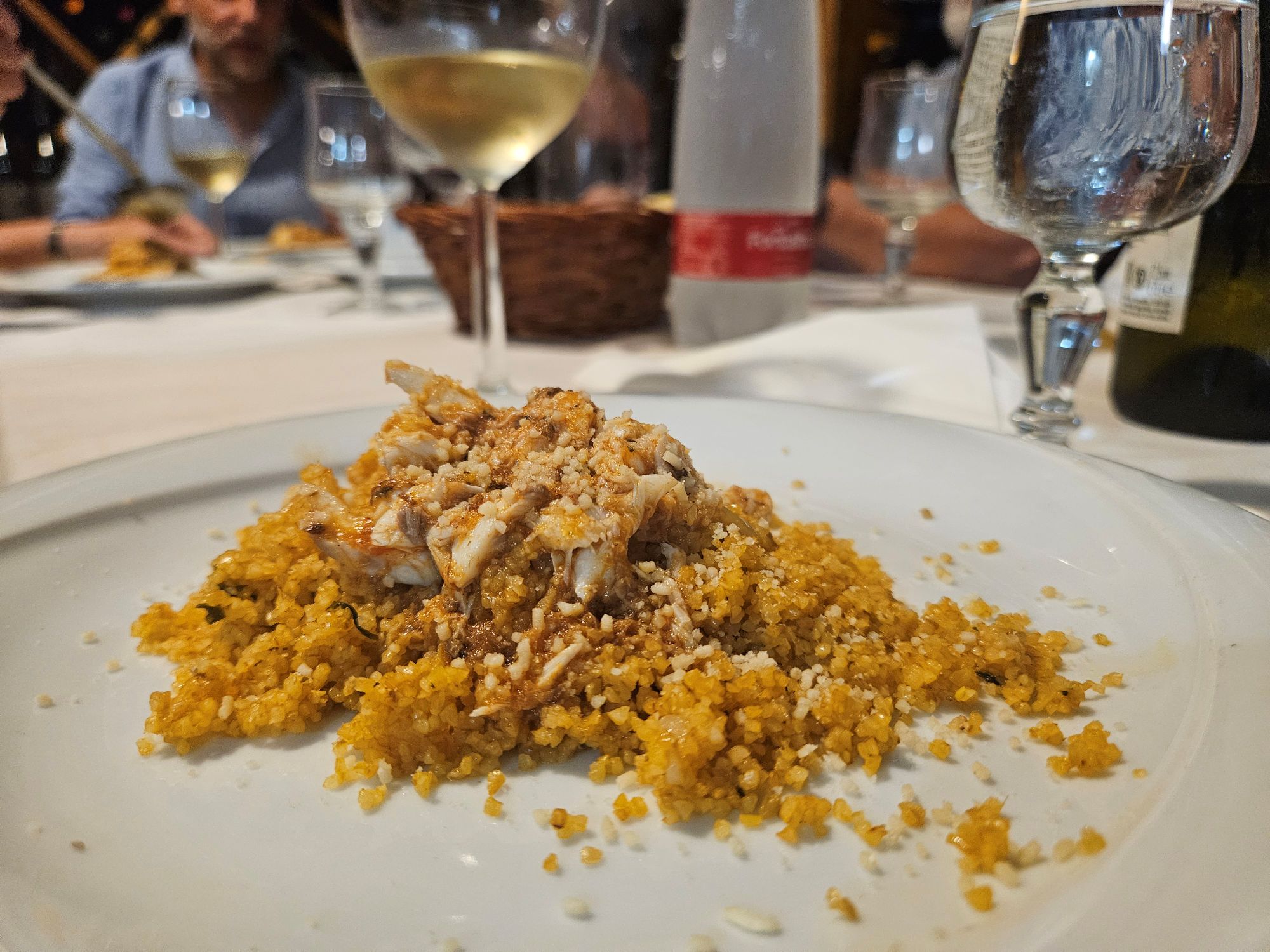
On our Taste of Sicily tour we visit Hajer at Catina Sicilian. Hidden in some back streets of Trapani this was a local secret until Stanley Tucci visited. Here’s hoping such fame won’t change things too much.
Hajer makes her couscous by hand, the traditional way and it’s a real treat to experience – a real Taste of Sicily.
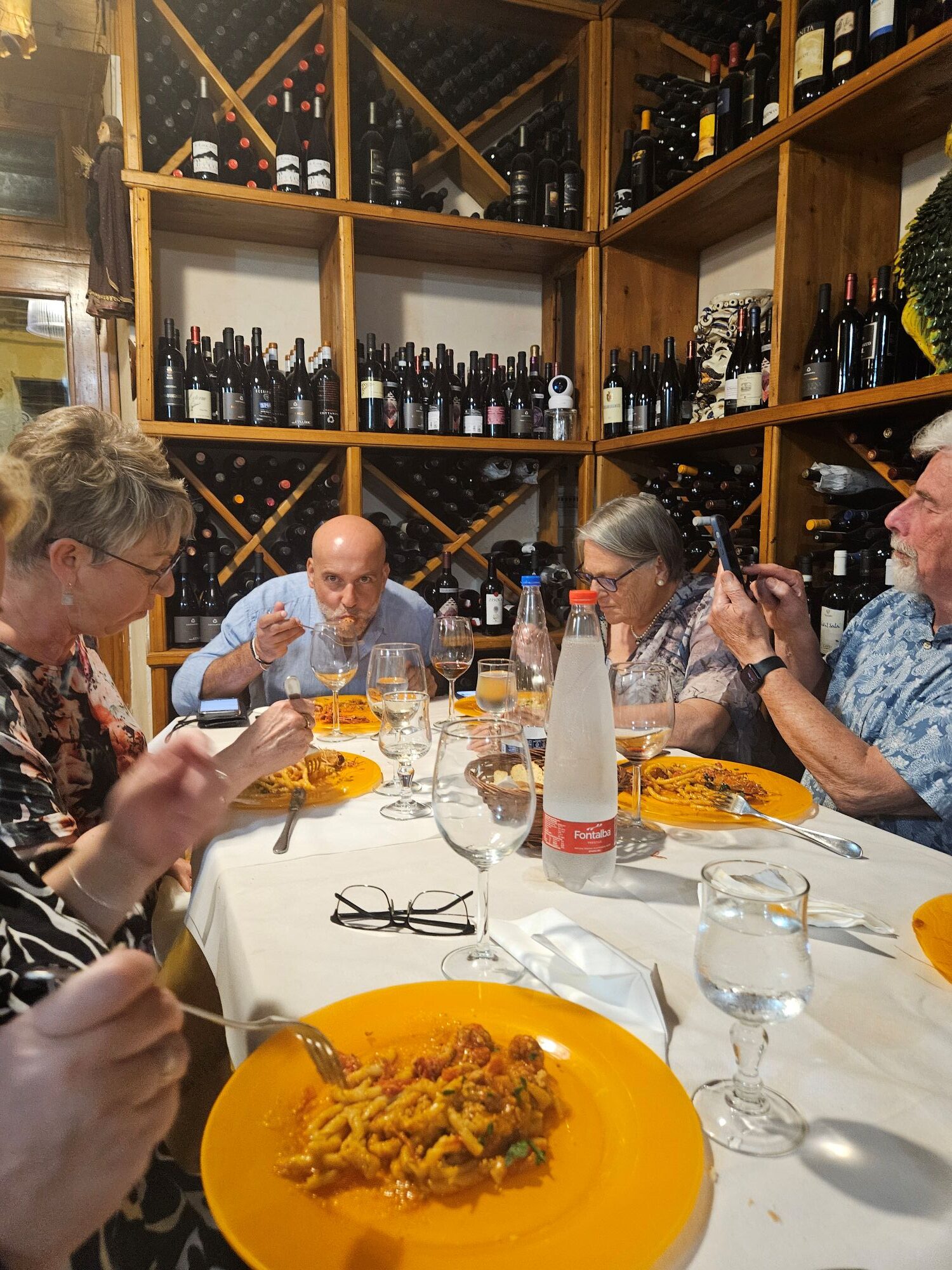
Discover more Sicilian foods you have to enjoy here, from cannoli made in a monastery in Palermo and prickly pear carefully peeled in the markets, Busiate alla Trapanese which we make in the hilltop town of Erice along with Arancino and Arancini (there’s a difference). We try them all on our Taste of Sicily tour including refreshing pomegranate, squeezed fresh in front of you at the markets or caponata, Genovese and so much more!