Marsala – not just a cooking wine
Marsala is a fortified wine from the region of the same name in Sicily. It is often referred to as a “perpetual” wine because it undergoes a “perpetuum” system, similar to a solera system, where various vintages are blended as wine is drawn from casks and replenished, resulting in a consistent style.
Most New Zealanders have only encountered Marsala as a cooking wine, but this wonderful wine has much more to offer.
With a rich, nutty profile, complemented by sweet notes of brown sugar, caramel, and vanilla Marsala is categorized by how long it is aged, “fine” (aged at least one year), “superiore” (two years) and “vergine stravecchio” (ten or more years).
Marsala wine is made from the Sicilian grape, Grillo which thrives in the hot temperatures in Sicily. If irrigated Grillo will produce volumes, but these grapes have not had to work for their survival and usually lack flavour.
Sicily has recently undertaken a revival of their wine industry, no longer relying on growing volume to send to Northern wine makers, but instead to produce quality wines of Sicily.
Grillos natural acidity makes it ideal for producing wines with balance and freshness, even in sweeter styles. Grillo’s thick skins help preserve its flavours, and its versatility in winemaking has allowed it to shine in both dry and sweet forms. Whether in a crisp, unoaked white wine or a rich, complex Marsala, Grillo continues to showcase the unique terroir of Sicily.
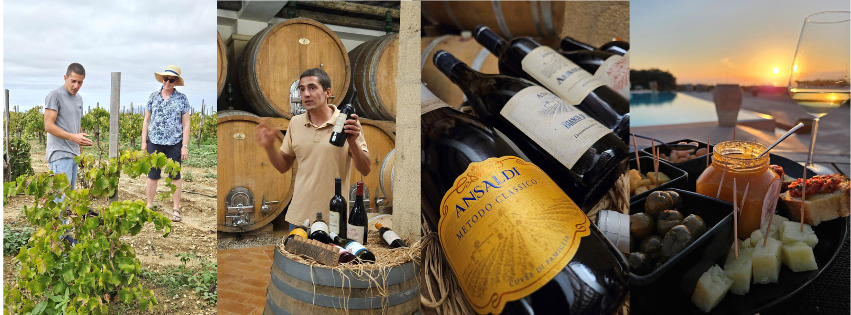
On our Taste of Sicily Tour we visit four very different wineries across the Island from Marsal to Mount Etna. In Marsala we enjoy a wonderful tour of the vineyard and cellar at Ansaldi before enjoying a few as the sunsets over the view.
We still have a few spaces left in what is our most popular tour, so click below for more details.
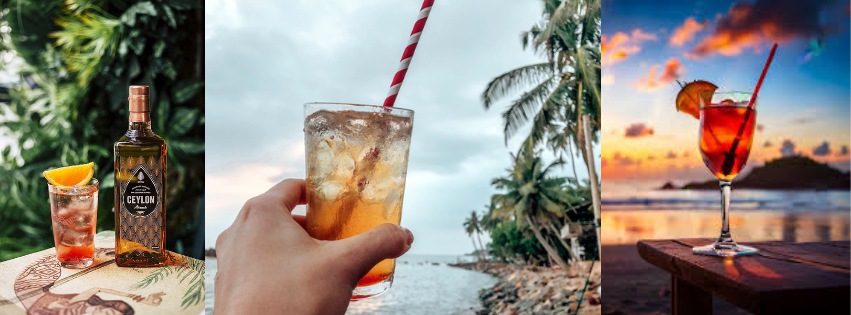
Arrack
Distilled from the sap of the coconut palm Arrack is, as Anthony Bourdain described it “a marriage of bourbon and rum, but with a stronger, burning kick and a mysterious bouquet”.
On our Taste of Sri Lanka tour, we witness how the sap is collected and enjoy the results, hopefully after a big day out, in a cocktail while we watch the sunset.
To collect the sap from the unopened flowers, or toddy as the locals call it, men will shimmy up tall coconut palms. They can be up there for hours using crude rope bridges to move between trunks. This is not a job for the faint hearted!
The toddy is a sweet, slightly tangy white liquid which begins to ferment very quickly, reaching 6-7% in alcohol in just a few hours! It is then distilled like whisky or brandy to an alcohol level of more than 60%, before water is added to bring that back down to 40%.
Like whisky it is often aged in casks, in the case of Arrack these are made from the precious Halmilla wood, native to Sri Lanka and southern India and imparting their own unique flavour.
Keen to discover more about Sri Lanka, it’s food, people, culture, history and wildlife? Join Emma Galloway on our tour next July. Just 8 spots left!
Vermouth
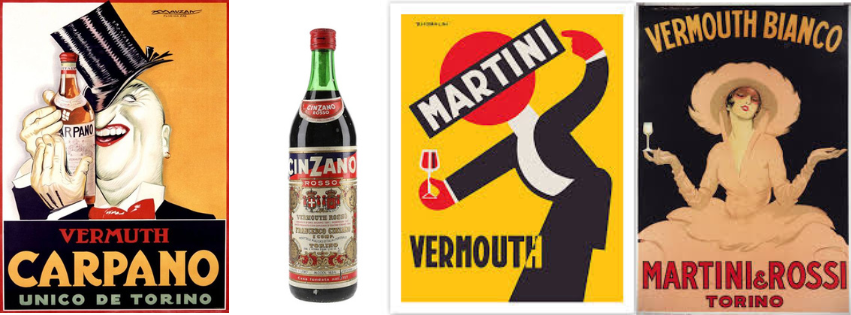
An aperitif, Vermouth is a fortified wine flavoured with herbs and botanicals. There are three general varieties: red (rosso), white (bianco) and dry.
While such a drink existed before them, the Italians made it famous (most notably those from Turin like Carpano, Cinzano and Martini). The name ‘vermouth’ comes from the French pronounciation of the German word Wermut, meaning wormwood. Fortified wines containing wormwood the herb used to make absinth) as the main ingredient existed in Germany around the 16th century. Around the same time, an Italian merchant began producing a similar product in Piedmont called ‘wormwood wine’.
But it was herbalist Antonio Benedetto Carpano, who in 1786 invented the formula which was to give rise to the category of Vermouth products, by combining herbs and spices with muscatel grapes. Carpano’s wine shop was situated just opposite the Royal Palace and, confident of the appeal of his new product, he sent a crate of Vermouth to King Vittorio Amedeo III. The king took an immediate liking to it and adopted it as one of the drinks of the royal household.
Vermouth soon became so popular that the Carprano wine shop stayed open 24 hours a day. Its success among the Turin aristocracy convinced Carpano to intensify production and, later, to export the drink.
A few decades before, in the 1750s, brothers – Giovanni Giacomo and Carlo Stefano Cinzano – created ‘vermouth rosso’ (red vermouth) which similarly became popular with the Turin aristocracy. The red version was followed by Cinzano Bianco.
Martini is another Turin vermouth brand. In 1863 the now famous Martini was born when Alessandro Martini and Luigi Rossi took over the National Wine & Spirits Distillery in a small village near Turin.
By the late 19th century, vermouth’s popularity grew when bartenders began using it in cocktails such as the Martini, the Manhattan, the Rob Roy and the Negroni.
Currently undergoing a bit of a renaissance, vermouths are being made in grape growing regions around the world, including NZ, as grape growers or wine makers dabble with distilling. Come with me on our Taste of Northern Italy tour to discover the original in Turin.

Cheers to new discoveries in South Australia
We naturally visit a number of wineries on our Taste of South Australia tour while also managing to sneak in a wonderful brewery as well as a gin tasting.
If you are a wine lover, or wanting to learn more about wine, this tour is perfect. We visit the big guys like Penfolds and DÁrdenerg, as well as small more niche producer like Kaesler and Olivers of Taranga.
Every time we go, I learn something new, be it a wine variety, style or technique. I recently discovered an article about the wine maker at Olivers of Taranga playing with the ancient method of fermenting wines in amphora and excited to visit and learn more.
Make sure you follow us on social to watch all the fun, or if keen to join us on our next tour of South Australia click below.